 (Image generated by AI)
Your Financial GPA
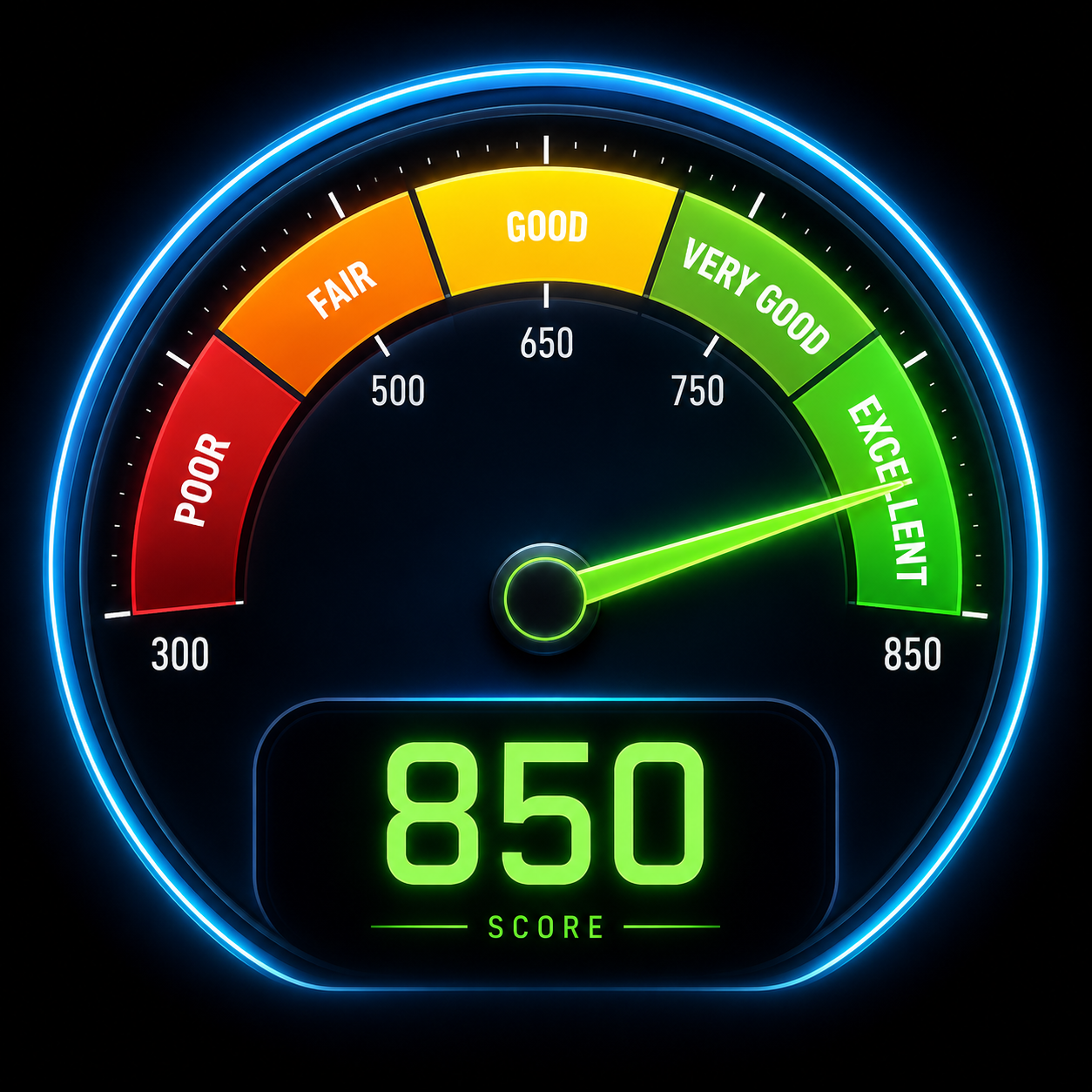
In Canada, your credit score is essentially your financial GPA. It is a three-digit number ranging from 300 to 900 that tells banks, landlords, and cell phone providers how trustworthy you are with money.
- 300 - 559: Poor
- 560 - 659: Fair
- 660 - 724: Good
- 725 - 759: Very Good
- 760 - 900: Excellent
If you want to rent a nice apartment, get a low interest rate on a mortgage, or even sign a post-paid cell phone contract, you need a Good to Excellent credit score.
How Your Score is Actually Calculated
In Canada, there are two major credit bureaus: Equifax and TransUnion. They calculate your score based on five key factors. Understanding these factors is the only way to improve your score.
1. Payment History (35% of your score)
This is the most important factor. Have you paid your bills on time? A single missed credit card payment (being 30 days late) will instantly drop your score and stay on your record for up to 6 years. Rule #1: Always pay at least the minimum balance on time.
2. Credit Utilization (30% of your score)
This is how much credit you are using compared to how much you have available. If you have a credit card with a $10,000 limit, and you spend $9,000 on it this month, your utilization is 90%. Banks view this as highly risky (it looks like you are desperate for cash). Rule #2: Keep your utilization below 30% ($3,000 out of $10,000) at all times.
3. Length of Credit History (15% of your score)
How long have you had credit accounts open? Banks trust people with a 10-year track record more than someone who opened their first credit card yesterday. Rule #3: Never close your oldest credit card. Even if you don’t use it, keeping your oldest account open anchors your average credit age.
4. Credit Mix (10% of your score)
Do you only have credit cards, or do you also have a car loan and a line of credit? Banks like to see that you can handle different types of debt responsibly.
5. Credit Inquiries (10% of your score)
Every time you apply for new credit (a new card, a car loan), the bank does a “Hard Check” on your file. This temporarily drops your score by a few points. If you apply for 5 credit cards in one month, it looks like you are in financial trouble.
How to Fix a Bad Score FAST
If your score is sitting in the 500s, do not panic. You can fix it, but it takes consistency.
- Set Up Autopay: Log into your banking portal and set your credit card to automatically pay the “Minimum Balance” three days before the due date. This ensures you never accidentally miss a payment (35% of your score).
- Pay Multiple Times a Month: If your credit card limit is $2,000, and you spend $1,800 a month, your utilization is a massive 90%. To fix this without spending less, just pay the card off every Friday. The credit bureau checks your balance on a random day. If you pay it weekly, the bureau will always see a low balance.
- Get a Secured Credit Card: If your credit is so bad that you cannot get a normal card, get a “Secured Card” from Capital One or Neo. You give them a $500 cash deposit, and they give you a card with a $500 limit. Use it for groceries, pay it off immediately, and watch your score slowly climb.